

Overview
EMRS started in the year 1997-98 to impart quality education to ST children in remote areas in order to enable them to avail of opportunities in high and professional educational courses and get employment in various sectors. The schools focus not only on academic education but on the all-round development of the students. Each school has a capacity of 480 students, catering to students from Class VI to XII. Hitherto, grants were given for construction of schools and recurring expenses to the State Governments under Grants under Article 275 (1) of the Constitution.
In order to give further impetus to EMRS, it has been decided that by the year 2022, every block with more than 50% ST population and at least 20,000 tribal persons, will have an EMRS. Eklavya schools will be on par with Navodaya Vidyalaya and will have special facilities for preserving local art and culture besides providing training in sports and skill development. Across the country, as per census 2011 figures, there are 564 such sub-districts out of which there is an EMRS in 102 sub-districts. Thus, 462 new schools have to be opened by the year 2022.
Objectives
Eklavya Model Residential Schools (EMRS) are co-educational, fully residential institutions established to provide free, quality education to Scheduled Tribe (ST) students from Class VI to XII, with a strong emphasis on academic excellence, holistic development, cultural preservation, and leadership skills to empower tribal youth and bridge the educational gap.
Eligibility Criteria
Scheduled Tribe (ST) Students: Primarily for ST students, with a focus on Particularly Vulnerable Tribal Groups (PVTGs) and first-generation learners.
Age and Grade: Admissions typically from Class VI onwards, adhering to age norms prescribed by the respective State Education Department.
Residency: Preference for students from the district where the EMRS is located.
Benefits
Free Education: Comprehensive education from Class VI to XII without any cost.
Residential Facilities: Provision of boarding, lodging, and other amenities at no charge.
Holistic Development: Emphasis on academics, sports, cultural activities, and vocational training.
Inclusive Infrastructure: Facilities designed to be accessible for children with disabilities.
Monitoring & Evaluation
Regular Assessments: Periodic evaluations of academic performance, infrastructure quality, and overall functioning of schools.
Third-Party Audits: Independent agencies conduct audits.
Feedback Mechanisms: feedback from students, parents, and staff for continuous improvement.
Use of Technology: Implementation of School Management Systems (SMS) and other digital tools for real-time monitoring and data management.
Establishment Norms
Site Selection: EMRS are set up in blocks with more than 50% ST population and at least 20,000 tribal individuals.
Construction: Development of modern infrastructure, including classrooms, hostels, libraries, and sports facilities.
Administration
National Education Society for Tribal Students (NESTS): An autonomous organization under the Ministry of Tribal Affairs responsible for managing EMRS.
State Societies: State-specific bodies oversee the day-to-day operations of schools within their jurisdiction.
EMRS Schools in Uttarakhand
There are four EMRS institutions in Uttarakhand:
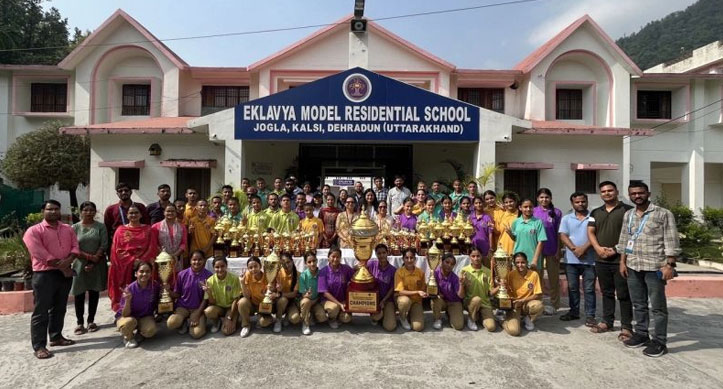
1- EMRS Kalsi, Dehradun
|
 |
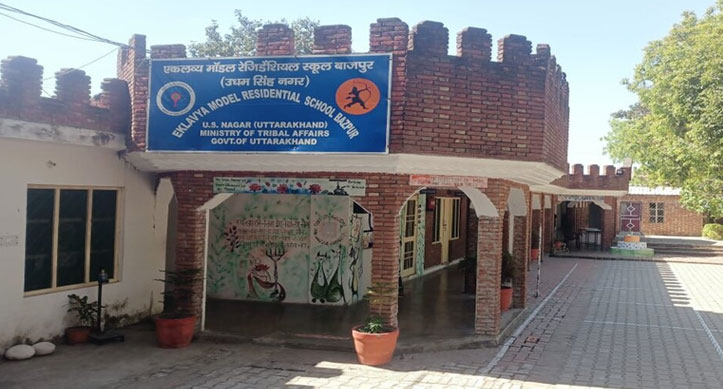
2- EMRS Bazpur, Udham Singh Nagar
|
 |
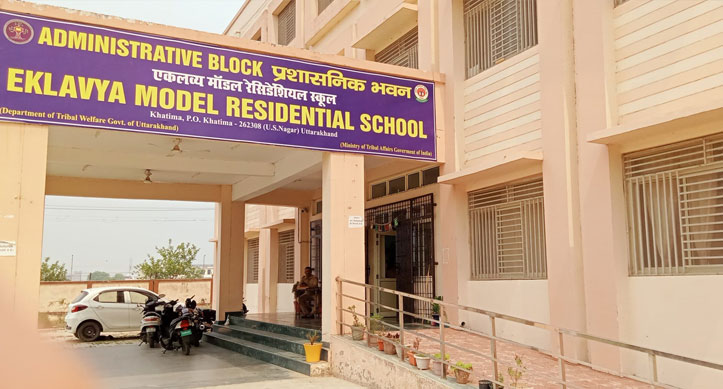
3- EMRS Khatima, Udham Singh Nagar
|
 |
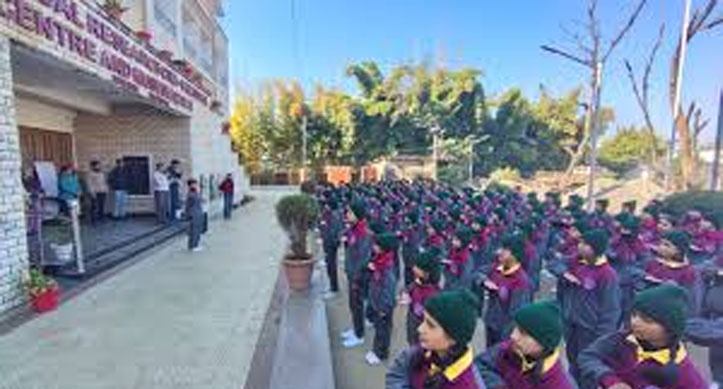
4- EMRS Chakrata, Mahrawana, Dehradun
|
 |
